|
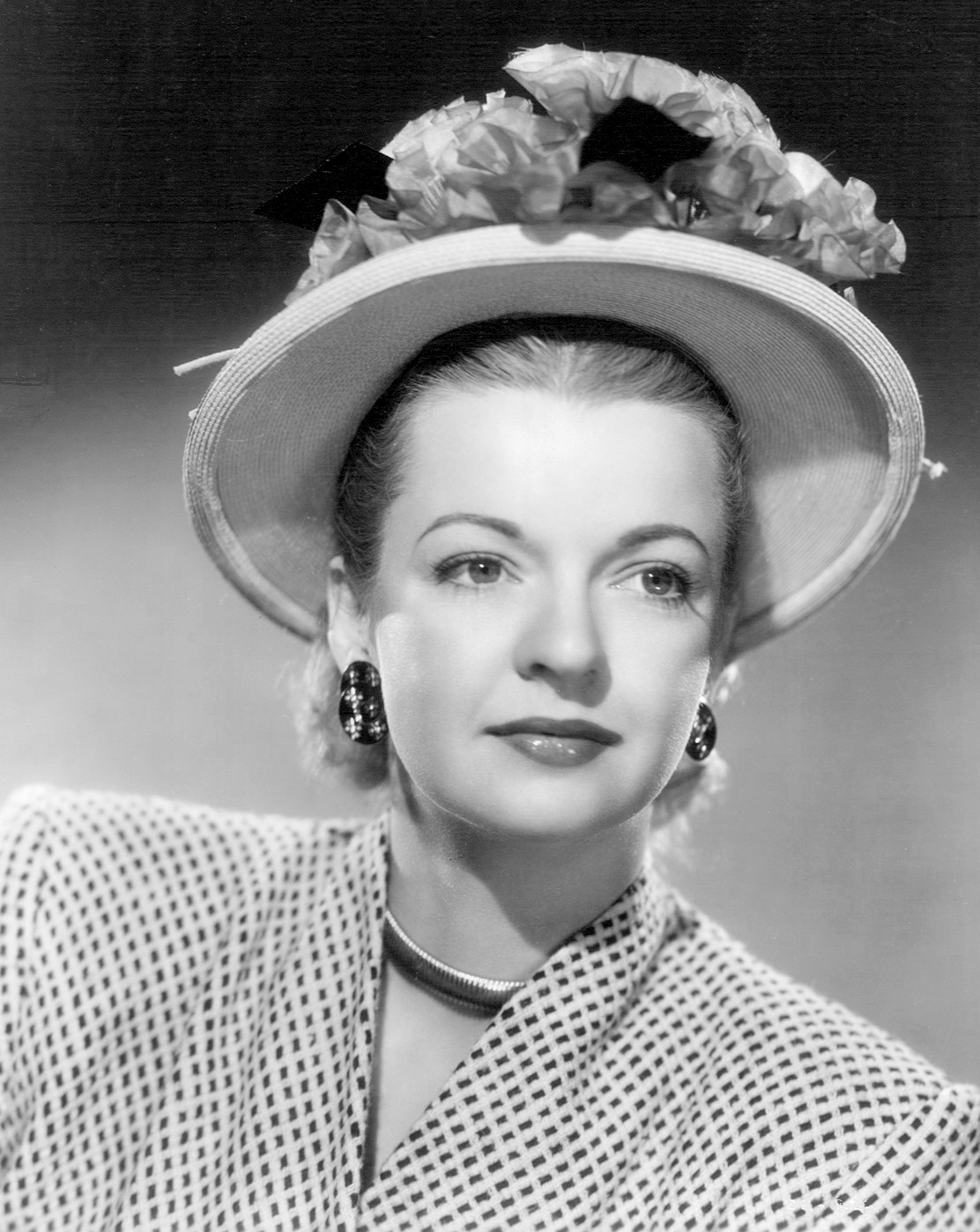
Dale Evans -- Queen of the West
Pictures courtesy of the Roy
and Dale Evans Rogers Children's Trust |
She was born in Uvalde, Texas, late October, 1912. For three days after her birth, Betty Sue and Walter Hillman Smith's daughter lay in an unconcious state, accidently induced by a drug Betty Sue was given during labor.
Three long, silent days . . .
Then she woke up and from then on, silence was a thing of the past.
Singing, dancing, and perfoming in whatever way she could, Frances Octavia Smith
* was an irrepressible child of Texas who loved fun and demanded attention. That was her personality, but being the first grandchild and having six aunts to admire her didn't do much to discourage it. Betty Sue said of her daughter, "Frances is too impulsive; she means well, but she rushes into things before she thinks them through."
She rushed through school, skipping the first, second, and eighth grades. During seventh grade she had a physical breakdown (any other child might have been called sickly, as Frances dealt with mumps, chicken pox, the flu, diphtheria, a glandular disturbance, and a sprained hip, throughout her young and often too-busy years) and spent most of the time in bed. Then she quit school during her junior year and eloped with nineteen-year-old Thomas Fox.
She was only fourteen.
Marrying so young was not altogether uncommon in that part of the country back then, but it certainly didn't match up with Betty Sue's ideas of what would be good for Francis---or, for that matter, the truth of what would be good for Francis. When the young couple became pregnant, Tom left. He came back only to leave again, and then come back again. Finally, after baby Tommy was born and Tom Sr. had once again deserted Francis, her parents gave her an ultimatum: Tom Sr., or them.
She chose her parents, and regretfully
(she had tried so hard!) agreed to cut off communication with Tom Sr. She didn't apply for a divorce for over a year.
During the period of Frances' early teens, her parents were also having marriage problems, and were even divorced for a few years. Walter Hillman Smith had a terrible gambling addiction, and when he and Betty Sue remarried, it was on the grounds that she would be the one to handle their finances.
At the age of sixteen, Francis started rebuilding her life and her dreams, now that she and her baby had some stability in her parents. She enrolled in business school, and after completing that, she and Tom and her parents moved to Memphis, Tennessee, where Francis got a job as a secretary with an insurance firm.
Francis was always fighting for a little ground on which to stand, on which to build her dreams, on which to make a name for herself.
Eventually, she gained a position on a radio show and garnerned popularity in Memphis. Next she tried to achieve fame in Chicago, but fame was elusive, and ill health was not; she came down with pneumonia, along with a severe case of anemia, and she went back to her parents and Tommy in Texas.
Years went by, and Francis ventured many times into show business (to Louisville, to Dallas, and back to Chicago), trying to make it to New York---to Broadway's musical comedies. Sometime during all of this, around 1930, she met and married a man named August Wayne Johns, nicknamed "Candy."
He was, like Francis' father, an obsessive gambler.
That marriage ended in divorce in 1936, and throughout the years, as "Francis/Dale" wrote several autobiographical works, she never talked much about Candy. Probably the most documented about their marriage is in Cheryl Rogers-Barnett's book,
Cowboy Princess Rides Again.
In 1937, she married Robert Dale Butts ("R. Dale"), a marriage that would last nine years. R. Dale was a musical arranger. Francis was now known on radio as Dale Evans (for a time both she and her husband went by "Dale"). They moved to Chicago, and then on to Hollywood.
In Hollywood, Dale was living a lie. To get work, her agent had her say she was only twenty-one (she was really twenty-eight), and that Tommy was her brother, not her son. The lies haunted her conscience for years. But she was an actress now, working on the screen as well as the radio.
Texas was for Dale a long, long ways away.
But her dream was coming together---she was heading for musical comedy success when---
BOOM!---she found herself firmly, deeply planted in the success of playing damsel in distress (more or less) to Roy Rogers' cowboy hero in B-westerns.
Which was
not what she wanted to be doing.
Soon after Dale started down the road to becoming the "Queen of the West," her third marriage disintegrated and R. Dale became her ex-husband, although they were to stay on friendly terms for years.
Now Dale was thowing herself wholly into her work; her work was her life, and playing someone else for the cameras was no more a lie than what she was offscreen. She became obsessed with improving her acting, and once in a while when the question popped up,
"Isn't there more to life than this?" she tried to push it back down again.
Her co-star, Roy Rogers, had some of the same questions as Dale, and they found themselves having deep discussions on lunch break and around the set. They were together "most of their waking hours," and they talked about a lot of things---such as religion.
Dale had never doubted God's existence; she just thought that
she should be the one in control of her life. . . . God could have '
this piece' and '
this piece' of her life
, but 'this piece?' That was too much a part of her to let go.
One day she asked Roy if He believed in God.
"No," he told her firmly. He just couldn't see how a God that was supposed to be so loving could allow innocent children to suffer with diseases and crippling injuries. And also, if religion was such an all-fired good thing, why didn't people who claimed to have it act any different than everybody else? If their God did exist, Roy didn't care to be acquainted with Him.
His answer left Dale unsatisfied.
Roy and Dale got closer and closer over time, and she watched him go through the heartbreak of losing his second wife, Arline, to a blot clot in November of 1946.
Dale was
still dreaming of things better than what she was doing, and she got a hiatus from Westerns and starred in a couple of "easterns" (as Fess Parker termed non-Westerns). But those weren't very successful, so she went back to horses and sagebrush---back to Roy.
On New Years Eve, 1947, Roy Rogers and Dale Evans were married.
Louella Parsons made the announcement via radio. She also announced that Dale had a grown son named Tom, but by this time, Dale was only thankful that the secret was out and she didn't have to pretend any longer.
Roy had a family already waiting for Dale when they were married. He had two daughters and a son, for Dale to be mother to. And "replacing" Arline wasn't going to be easy. To top it off, Roy was a busy man and expected Dale to be a full-time mom, which meant not a full-time actress.
Dale was walking on the fringes of sanity when Tom suggested she go to church and let God help her this time, with this marriage. She agreed to the church-going part.
After all, what could one little church service hurt? After all, she was a Christian . . . right? So she went. She listened. The whole message seemed aimed at her. She was convicted. But when the altar call came . . . she didn't go.
Tom asked her why.
She was already a Christian, she answered.
But she wasn't, and Tom knew it. He saw her fighting for peace, and looking for it in all the wrong places. He knew what she needed, and called her bluff.
"Give me until next Sunday; I want to think it over," was all she could promise.
To walk down that aisle---to give everything to God---meant taking the worth away from everything she had claimed to be before.
But that week between Sundays was long. The next Sunday, Dale went down the aisle, and she really meant it. Roy was not so sure about Dale's new ideas, but he was glad to see her new happiness.
Every Sunday, Dale asked Roy to come to church with her and the girls, and every Sunday, he didn't go.
One Saturday night, the Rogers had a party at their house, complete with cigarettes and cocktails---the usual Hollywood kind of party. Dale found no attraction in these sort of things any more, and mentioned that to a friend there. Roy overheard her and mistook her attitude as high-horse conceit.
After the party was over and the guests went home, Roy and Dale engaged in what was probably the biggest argument of their marriage.
Roy didn't understand. . . . What had come over Dale to make her so different?
They went to bed angry that night, but the next morning Roy spoke the words Dale had been waiting to hear:
he wanted to go to church.
He went to the altar that day, and both he and his daughter, Cheryl, were baptised that Easter Sunday.
 |
Pictures courtesy of the Roy and
Dale Evans Rogers Children's Trust |
After that, things were different around the Rogers' place, on many levels. As a family, they grew closer, and for Dale as an individual, having God at the center of her life erased all conflict she had had with her career.
When her agent called to say that Dale could get the part as Annie Oakley, with the London company of
Annie Get Your Gun, she turned it down. It was everything she had ever wanted in a role, but it would take her overseas and away from Roy and the kids---and that wouldn't work. She knew she would not care to do any sort of work unless it was with Roy.
During their 50-plus years of marriage, Roy and Dale were to experience some of the greatest highs (they were doing what they loved to do, and doing it with their Lord) and greatest lows (three of their nine children died at young ages) known to man.
Together, Roy and Dale created a legacy that endures strongly to this day.
~Don't stop here!~
Most of the information for this article was taken from Dale's book,
The Woman at the Well, and Cheryl Rogers-Barnett's books,
Cowboy Princess, and
Cowboy Princess Rides Again.
There are many more great books on Roy and Dale. If you are unfamiliar with their story, this
Happy Trails autobiography is a good place to start.
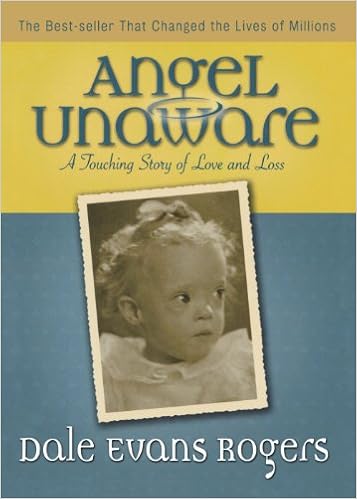
Dale wrote more than twenty-five books in all, from
Angel Unaware, published in 1953, to
Rainbow on a Hard Trail, published 1999.
*Dale's birth certificate lists her name as Lucille Wood Smith (Wood was her mother's maiden name), and the date of her birth as October 30, 1912. But Dale and Betty Sue both swore that Dale's birth name was Francis Octavia Smith, and her birthday was October 31, 1912, and that the other information was without basis.
According to Cheryl Rogers, Francis was named after a grandmother and a great-aunt.